Measuring Employee Relationship Quality

Measuring Employee Relationship Quality

Employee Relationship Quality

The Death of the Old Social Contract

We often talk about employees as human resources. We need to drop this terminology. Employees are not resources to be harvested or managed. They are people who turn up to work every day willing and able to do a good job for the customer. And very often we – the employers – prevent them from doing their job the best they can.

Sometimes we micro-manage them. Other times, we fail to give them the encouragement and motivation they need in order to succeed. We also expect them to achieve a proper work-life balance but fail to provide them with the flexibility to make it happen. We allowed them – actually forced them – to work from home during the COVID years. When they started to enjoy remote working, we forced them back into the office.

Even worse, we use phrases like “our staff are our most valuable asset” while secretly planning to cut 10% of the global workforce in response to AI, offshoring or other shadowy market forces. No wonder employees have become disillusioned and disengaged. 

It wasn’t always this way. In the 1960s and 1970s, there was a very clear and strong social contract between employer and employee. Baby Boomers enjoyed decent pay, job security, pension rights, regular and formal training, and so on. The contract worked both ways: employees were not just asked to work hard and do a good job for a good wage; they were expected to be loyal and stay for decades.

Over the decades, Baby Boomers retired and gave way to Generation X, Millennials, and now Generation Z. That social contract of old has all but disappeared for Gen Z employees. Today, the concept of a ‘job for life’ is – to quote Charles Dickens – as dead as a doornail. The nature of the employer/ employee relationship has changed utterly. Today’s job is no more secure than that of an English Premiership football manager.

A New Social Contract is Needed

If you think the previous paragraph is mere hyperbole, check the statistics.

The average tenure of Gen Z and Millennial employees is actually significantly less than that of an English Premiership football manager (currently 2.4 years). According to Randstad, a HR company, Gen Z’s average tenure in the first five years of their career is just 1.1 years compared to 1.8 years for Millennials. Millennials and Gen Z make up the majority of the workforce today and are far much more likely to ‘job hop’ than earlier generations.

The job market is different today – for both employees and employers. Employees may not have the job security of olden days but top companies have to battle to persuade the most talented people to join them. They also have to work much harder to make them stay. Remote working has further eroded the camaraderie between younger recruits, a key element in building bonds with colleagues and loyalty to the organisation.

Employee relationship quality has taken a major hit in the 21st century. And that’s a problem. A little employee churn is good. It allows new blood and new thinking to come into an organisation. A lot of churn is definitely not good, particularly if it takes 6-9 months to train a ‘newbie’ and get them fully up to speed, only to see them hop off to another company a few months later.

So how do we improve the quality of employee relationships with their employers? It seems to me that we need a new social contract. In many ways, Millennials and Gen Z are looking for the same things as Baby Boomers did. They want to feel that they are contributing, that they are constantly learning and progressing. Those elements are still at the heart of employee relationship quality. If we can build a new social contract with those elements at the heart of the offer, we have a good chance of keeping employees engaged. Engaged employees have a stronger bond with their employers. They stay longer. They perform better.

Measuring Employee Relationship Quality (ERQ)

We need to understand the quality of the relationships that our employees have with us in this new world. That means we need to measure it. We also need to ask the right questions for today’s new work environment.

Most companies with 1,000 or more employees already have robust systems in place for capturing the voices of both employees and customers. When it comes to mid-market companies, specifically those with 100-500 employees, there’s a much bigger deficit in understanding of what employees and customers think of them.

The lack of knowledge about employees is all the more surprising when you consider that companies today have access to a multitude of tools to capture their views. There really is no excuse today for not having a good employee feedback system in place. Think about it. Companies have email addresses for all employees to support employee surveys – something that often has to be gathered manually for customers, even when there is a customer relationship management (CRM) system in place.

The tools are available to capture the voice of the employee. Leadership teams just need to use them.

ERQ model_withCustFoc

So how do we measure Employee Relationship Quality?

Let’s start with a few basics:

  • Confidentiality. An effective employee feedback programme must be confidential so that employees can feel safe to speak openly and honestly. At the same time, it must deliver the level of detail and clarity required for leadership to drive meaningful change.
  • Methodology. We need to measure the right things for today’s employees. Today’s workplace is different – more remote working, less job security, greater tendency to ‘job hop’ and so on – and we need to reflect these changes in the work environment in the questions that we ask.
  • Frequency. All of our research suggests that the big annual employee survey is no longer enough. At a minimum, get feedback twice a year, or supplement an annual survey with more frequent pulse surveys on specific topics.

Deep-Insight has been capturing the voice of the employee for years but is now launching a new offering aimed specifically at this 100-500 employee market: Employee Relationship Quality (ERQ™).

ERQ is an independent and confidential way of getting employee insights that help you drive customer experience (CX) in your organisation. The ERQ model is based on eight drivers and takes into consideration the challenges of today’s world and aims to understand if your teams are set up for success. For example, it takes a close look at employees’ Wellbeing by measuring if they can maintain a sustainable work-life balance and if they feel a sense of job security. It also adds includes questions around Success and Support.

These eight drivers are all critical components of the current-day employee relationship.

Happy Employees = Happy Customers

For years, we have known intuitively that happy employees equals happy customers, which in turn leads to more growth and higher profits.

Back in 2002, Anne Mulcahy, the former CEO of Xerox – and the woman credited with turning around the ailing company – talked about what it was like to take the helm at a company with five consecutive quarters of losses, huge debts, and dismal employee morale. She talked about her philosophy of focusing on customers and employees:

“What do you really believe makes a difference in the company? For me it’s really clear. It’s about customers and employees. If you take care of your customers and you have motivated employees, everything else follows.”

More recently, Anne Mulcahy made a similar comment in an interview with Forbes magazine:

“Employees who believe that management is concerned about them as a whole person, not just an employee, are more productive, more satisfied, more fulfilled. Satisfied employees mean satisfied customers, which leads to profitability.”

Satisfied employees mean satisfied customers, which leads to profitability.”


Colm O’Neill is a Partner at KPMG. He previously ran the Corporate and Public Sector division at BT and talks about doing so with three simple metrics: employee engagement, customer relationship quality, and financial results.

In that order. Financial results are simply the outcome of happy employees and happy customers. Colm intuitively understood that point. Happy customers stayed with you for the long haul and didn’t churn. They also increased their spend with you over time, and were more profitable. For Colm, the starting point for long-lasting client relationships was the employee. To paraphrase Anne Mulcahy, if you get the employee part right, everything else follows.

If you don’t currently measure employee relationship quality, make sure you put a ‘Voice of the Employee’ system in place this year. Make that your #1 priority in 2026. You don’t have to use Deep-Insight’s ERQ measurement system. There are plenty of other tools out there. But if you don’t already have a robust system in place and want to have a chat about the best way to start, do get in touch with us.

Introducing: Employee Relationship Quality

Introducing: Employee Relationship Quality

Employee Relationship Quality (ERQ)

New Product Launch: Employee Relationship Quality (ERQ)

Deep-Insight is delighted to launch a new Voice of the Employee service, specifically aimed at companies with 100-500 staff: Employee Relationship Quality (ERQ™).

Why 100-500 staff?

Our research shows that most companies with 1,000 or more employees have systems in place for capturing the voices of both employees and customers. That’s not the case for mid-market companies, specifically those with 100-500 employees, where many companies have no mechanism for understanding what their staff think of them.

This is a product launch that has been a couple of years in planning, and has involved a significant amount or research and discussion with HR professionals across Europe. We would specifically like to thank the following for their time and input:

Setting Up An Effective Employee Feedback Programme

So how do we set up and run an effective employee feedback programme?

Let’s start with a few basics:

  • Confidentiality. An effective employee feedback programme must be confidential so that employees can feel safe to speak openly and honestly. At the same time, it must deliver the level of detail and clarity required for leadership to drive meaningful change.
  • Methodology. We need to measure the right things for today’s employees. Today’s workplace is different – more remote working, less job security, greater tendency to ‘job hop’ and so on – and we need to reflect these changes in the work environment in the questions that we ask.
  • Frequency. All of our research suggests that the big annual employee survey is no longer enough. At a minimum, get feedback twice a year, or supplement an annual survey with more frequent pulse surveys on specific topics.

Deep-Insight has been capturing the voice of the employee for years but is now launching a new offering aimed specifically at this 100-500 employee market: Employee Relationship Quality (ERQ™).

ERQ is an independent and confidential way of getting employee insights that help you drive customer experience (CX) in your organisation. The ERQ model is based on eight drivers and takes into consideration the challenges of today’s world and aims to understand if your teams are set up for success. For example, it takes a close look at employees’ Wellbeing by measuring if they can maintain a sustainable work-life balance and if they feel a sense of job security. It also adds includes questions around Success and Support.

These eight drivers are all critical components of the current-day employee relationship.

The Eight Drivers of Employee Relationship Quality

Today’s employer-employee relationships can be complex, so we need to analyse how well we are doing on eight different dimensions:

  1. BENEFITS aims to understand if you as an organisation are meeting your employee’s basic needs. It looks at the following sub-drivers: Pay and Opportunities.

  2. SUPPORT aims to understand if you are offering your employees the required guidance and training to do their job. It looks at the following sub-drivers: Onboarding, Development and Environment.

  3. SUCCESS looks at if your employees have the tools required to do their job and if they feel a sense of agency over their role. Sub-drivers of success are: Agency and Satisfaction.

  4. WELLBEING aims to understand if your employees are satisfied with the work-life balance provided and if they feel a sense of teamwork and appreciation. It’s sub-drivers are: Work-Life Balance, Collaboration and Job-Security.

  5. CULTURE aims to understand if you provide your employees with a respectful and safe working environment. The sub-drivers of culture are: Safety, Respect and Inclusion.

  6. TRUST aims to understand if your employees feel a sense of trust and if they feel like they are being treated fairly, with honesty and integrity. The sub-drivers are: Honesty, Integrity and Fairness.

  7. COMMITMENT looks to understand if your employees feel proud to be a part of your organisation and a sense of loyalty to stay with you long-term. The sub-drivers are Pride and Loyalty.

  8. CUSTOMER FOCUS aims to understand if your employees see your organisation as one that puts its customers first. The sub-drivers are Customer Care, Reliability and Responsiveness.

Interested?


If you would like to set up an Employee Relationship Quality (ERQ) programme, we’d love to talk!

What is a ‘Good’ Employee Net Promoter Score?

What is a ‘Good’ Employee Net Promoter Score?

Last year, I wrote a blog post entitled What is a ‘Good’ B2B Net Promoter Score?. For some reason it turned out to be surprisingly popular. The blog still gets dozens of hits every week. I’m guessing that was because there’s a lot of nonsense posted on the Internet about companies achieving Net Promoter Score (NPS) results of +62 or even +78, or about people being hugely disappointed because they only achieved a score of +25.

Meanwhile, some of our own clients at Deep-Insight would get upset when I tell them their customer NPS was only marginally positive or – even worse – negative. The two simple messages in that blog post were:

“Be careful about how you interpret NPS figures”

and

“A customer Net Promoter Score of approximately +10 is the average for European B2B firms.”


eNPS versus NPS

In that blog, I was discussing NPS as a measure of customer advocacy. More and more, it is also becoming the de facto standard for measuring employee advocacy and employee engagement. So this blog will address the question: “What is a ‘Good’ Employee Net Promoter Score?”

Before I let you know what that magic number is, it’s worth digressing slightly to explain the basics of how NPS is calculated. If you’re already a net promoter aficionado, skip the box below.

HOW IS THE NET PROMOTER SCORE CALCULATED?

For the uninitiated, a company’s Employee Net Promoter Score (eNPS) is based on the answers its employees give to a single question:

“On a scale of 0 to 10, how likely are you to recommend Company X to a friend or colleague?”

Employees who score 9 or 10 are called ‘Promoters’. Those who score 7 or 8 are ‘Passives’ while any employee who gives a score of 6 or below is a ‘Detractor’. The actual eNPS calculation is:

Net Promoter Score = the percentage of Promoters minus the percentage of Detractors

Theoretically, companies can have a Net Promoter Score ranging from -100 to +100.


So think about it. The only Promoters you have in your company are those employees who are prepared to give you a score of 9 or 10 out of 10. In the average American company (remember that the whole Net Promoter concept originated in the USA) that makes sense. Americans tend to score very positively when they are satisfied, so having a high cut-off point is appropriate. However, if you’ve grown up and live and work in a European country, you approach the Net Promoter question from a very different cultural perspective.

It’s a Cultural Thing

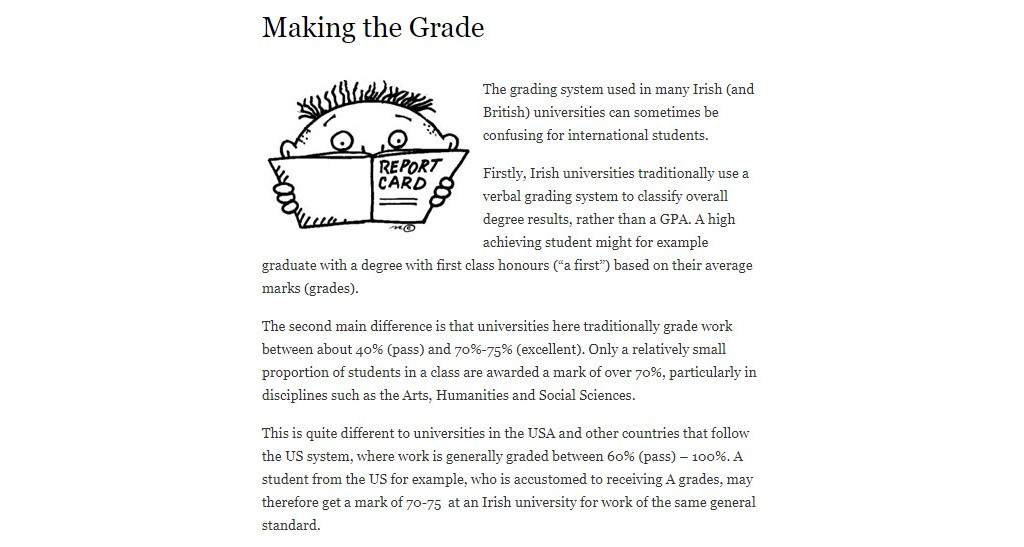
Many – nay, most – Europeans regard 8/10 as a very good score. Some will argue that 9s or 10s are only handed out in exceptional circumstances. This is culturally ingrained into us Europeans through our schooling system and particularly through our university grading system.

Making the Grade
In European universities, a First Class Honours degree requires a score of 70% (7 out of 10). Scores of 75% are remarkable, while scores of 80% (8 out of 10) and higher are almost unheard of. These cultural differences have to be taken into account when interpreting whether a particular Employee Net Promoter Score is ‘good’ or ‘bad’.

The Magic Number

So what is a ‘Good’ Employee Net Promoter Score? We have been measuring NPS and eNPS since 2006. We do this mainly for European and Australian companies. The average Employee Net Promoter Score (eNPS) across all of our clients during that time has been a paltry -10. Yes, that really is a negative sign before the 10.

MINUS TEN!

Put it another way: achieving a positive Employee Net Promoter Score is a solid achievement for most European firms. Rarely do we see eNPS results in excess of +20.

So there you have it. If your company has just received a negative eNPS in the latest employee survey, don’t feel too bad. You’re in good company!
To find out more about Deep-Insight’s employee assessments, click here.
Does NPS Work for B2B Companies

* Net Promoter® and NPS® are registered trademarks and Net Promoter SystemSM and Net Promoter ScoreSM are trademarks of Bain & Company, Satmetrix Systems and Fred Reichheld