This is a story about rats, cobras and economists (and no, they’re not the same thing!) but it’s primarily a blog about a British economist called Charles Goodhart and his take on target setting, key performance indicators (KPIs) and the law of unintended consequences.
Goodhart is a man whose musings are worth reading if you’re struggling to make your customer experience (CX) programme work. All CX programmes involve the measurement of customer satisfaction (CSat), Net Promoter Score (NPS) or similar KPI. Companies will sometimes incentivise their employees to achieve a particular CX objective: “If we hit our NPS target of +50 this year, all sales staff get an additional bonus of £1,000.” This is not an uncommon practice. It’s also not a good one, as we are going to find out shortly.
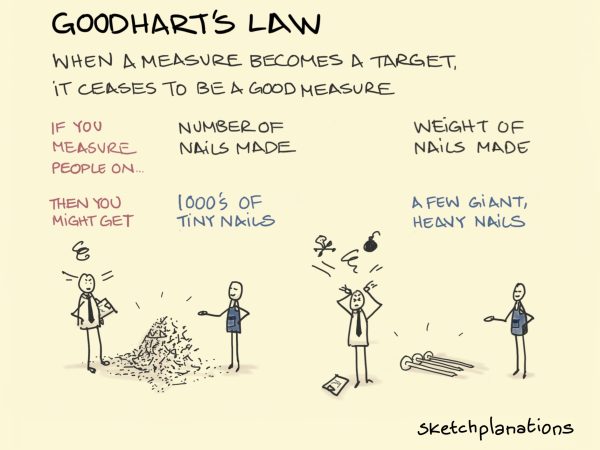
Charles Goodhart is best known for Goodhart’s Law, which is neatly summarised in the Sketchplanations cartoon above. Setting targets can result in unintended consequences, particularly where incentives are involved.
Before we delve into Goodhart and his famous law, let’s start with a couple of stories about rats and cobras.
The Great Hanoi Rat Hunt
In 1902, the French ruled Indochina, a region in South East Asia comprised of modern-day Cambodia, Laos and Vietnam. The capital and administrative centre was Hanoi.
That year, the French administrators introduced a bounty on rats after it was discovered that rats played a significant role in transmitting the plague. The Third Plague Pandemic was a pretty serious issue in Asia at the time. It had spread from China in the late nineteenth century and by the time it was finally eradicated in the 1960s, more than 10 million people had died from the plague.
A bounty seemed to make sense. To claim it, the locals simply had to bring in a bag of rat tails. There was no need for piles of dead rats clogging up the corridors of power in Hanoi – tails would suffice. Within weeks, the bounty was working. Hundreds of rat tails poured in. Then thousands. It seemed too good to be true, and so it turned out to be.
It didn’t take long for French officials to figure out what was happening. The bounty had created an entirely new industry in Hanoi where rodent tails were brought into the capital from the countryside. Worse still, entrepreneurs in Hanoi started to breed rats in order to increase their bounty revenues. The number of rats in Hanoi was increasing, rather than decreasing.
Eventually, the bounty was discontinued. This story of administrative failure and unintended consequences is told in Michael Vann’s book The Great Hanoi Rat Hunt.
The Cobra Effect
It’s not just the French who were outwitted by their colonial subjects. A similar case happened under British rule in India, and documented in Horst Siebert’s book Der Kobra-Effekt.
At the same time that the French were grappling with a rat epidemic in Hanoi, the British were dealing with a cobra explosion in India. Cobras were viewed by the British administrators as deadly pests and a bounty was introduced in Delhi for every dead cobra handed in to the authorities. Many cobras were killed and handed in but, to the bemusement of the British rulers, the cobra population seemed to be on the rise.
It’s the same story of simple economics: the cost of breeding a cobra was significantly lower than the bounty, so entrepreneurs started to breed cobras. When the bounty was stopped, the breeders released the remaining cobras into the wild, further exacerbating the situation.
Goodhart's Law
Charles Goodhart is a British economist. He was born in 1936 and spent nearly 20 years of his career at the Bank of England, working on and writing about public and financial policy. In 1975, he wrote a paper containing the line: “whenever a government seeks to rely on a previously observed statistical regularity for control purposes, that regularity will collapse.”
The comment was specifically about monetary policy but would later be generalised as a law about targets, metrics and key performance indicators (KPIs). In 1997, the anthropologist Marilyn Strathern expressed Goodhart’s Law as follows when she was investigating grade inflation in university examinations:
When a measure becomes a target, it ceases to be a good measure. The more a 2.1 examination performance becomes an expectation, the poorer it becomes as a discriminator of individual performances. Targets that seem measurable become enticing tools for improvement.
Marilyn Strathern’s interpretation that has become the most widely used today.
When a measure becomes a target, it ceases to be a good measure
The basic message from Goodhart’s Law is a simple one: beware the law of unintended consequences when you set targets for people to achieve.
This is equally true when companies set targets in the field of customer experience (CX). If senior leadership teams incentivise their sales people and account managers to hit Net Promoter Score (NPS) targets, they will be achieved come hell or high water. In a previous blog, I outlined how CX programmes are often ‘gamed’ to achieve ridiculously high NPS targets which bear no relationship to the company’s actual performance. Common actions taken to game the CX system include:
Selecting only those clients who are Ambassadors for you and your product or service, when you are looking for customer feedback
Within those clients, selecting only those individuals who you know will score you 9/10 or 10/10 (these are ‘Promoters’ in NPS terminology)
Making sure to deselect any client that is likely to give you a poor score, using excuses like: “Now is not the right time to ask their views” or “We’ll only antagonise them if we approach them now”
Refusing to send a survey to anybody who doesn’t know you really well, even if it’s a senior decision maker that you’d love to have a conversation with. Why? The chances of them scoring you 9 or 10 are slim
Not outsourcing the NPS survey process to a third party that can give the option of confidentiality to survey participants – confidential surveys are likely to elicit lower scoreseven if they provide a much more realistic and honest view of your product or service
In many cases, employees and leadership teams are unaware that they are gaming the system. They simply believe that they are doing the right thing for the company.
Avoiding the CX Rat Trap - 5 Rules
Rule No. 1: Do not incentivise employees to achieve CX targets. It’s that simple. If you do, you’ll end up with more rats and cobras than you can handle.
Rule No. 2: If your Senior Leadership Team or Board is bonused on achieving NPS results, stop this practice immediately! You would be amazed at the number of companies that engage in such bonus schemes.
Rule No. 3: Resist the temptation to publish your Net Promoter Score in your annual report. All you are doing is setting yourself up for inflated NPS results as nobody in the organisation will want to be associated with a ‘down year’. It’s human nature. By accident or design, employees and leaders will game the system to achieve higher scores next year.
Rule No. 4: Put a robust CX governance structure in place. Make sure ALL clients are surveyed. Sign off the contact lists. Resist the urge to exclude people whose views might be unfavourable – you want to know what they are thinking.
Rule No. 5: Finally, don’t approach CX with the mindset of a colonial administrator! Senior leadership teams have to view customer feedback as a gift. They have to encourage their colleagues to be open about getting feedback, whether good, bad or indifferent. Without honest feedback, change will never happen. Poor practices will continue and eventually clients will leave.
Finally, if you want to find out more about how to set up and run a customer experience (CX) programme effectively, contact us for a chat. We’d love to hear from you.
Later this year, Bert Paesbrugghe will be hosting a LinkedIn webinar called The B2B Customer Success Blindspot: Why NPS Isn’t Enough. It sounds like it will be a good session and I have cheekily borrowed his title for this blog as it got me thinking about some of the reasons why B2B companies set up customer experience (CX) or Net Promoter Score (NPS) programmes in the first place.
More important, it’s worth reflecting on why these CX and NPS endeavours often fail to deliver on their initial promise. And that’s the sad truth – many of these programmes fail to improve the service delivered to customers. They don’t succeed for a variety of reasons. One of these is the belief that Net Promoter Score is a silver bullet for solving all manner of customer woes.
It’s not. That’s the blindspot. NPS is not enough for B2B companies.
B2B is different
The first thing to mention is that the Business-to-Business (B2B) world is VERY different to its Business-to-Consumer (B2C) counterpart.
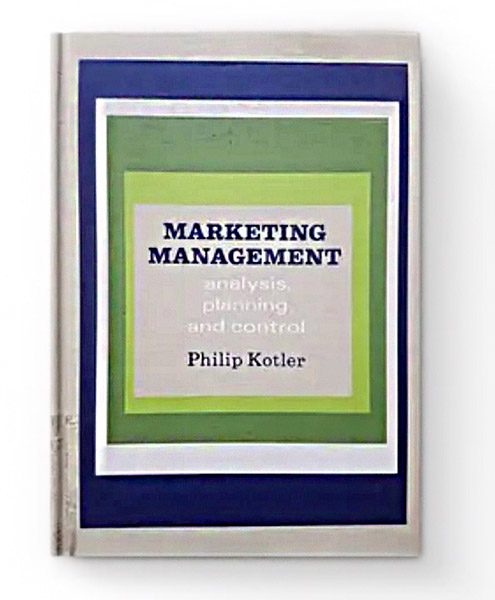
The consumer world is all about the 4Ps: Product, Price, Place and Promotion. Marketing guru Philip Kotler popularised the 4Ps back in the 1960s. They were a core part of his Marketing Management book that many of us still have on our shelves today.
My only real problem with the 4Ps model is that it’s essentially a B2C concept. It doesn’t cover the subtleties of the B2B world where very often a service provider is delivering a very complex service across multiple locations – often in different countries. This is a world away from selling and marketing consumer products such as Mars Bars or Mercedes cars.
The 4Ps also don’t take into account the need for key/ global account management or the associated challenges of building and maintaining relationships with multiple decision makers and influencers across large global organisations.
NPS is one-dimensional
Net Promoter Score has proven to be one of the most durable metrics in management, ever since its invention by academic and business consultant Fred Reichheld more that two decades ago. Reichheld’s basic premise was that you only need to ask one question in order to understand if a customer is going to stay loyal to you or not. The question is: “How likely are you to recommend us to a friend or colleague?”
Fred, an excellent marketeer, promoted the benefits of his Net Promoter Score (NPS) concept in publications like the Harvard Business Review. He then proclaimed its merits in his 2006 book The Ultimate Question. Since then, NPS has became a hugely popular metric for customer loyalty and customer experience.
I’vewritten about NPS before and, in general, I’m a fan of the metric for both its simplicity and its popularity. Sure, it’s not perfect, as Professor Nick Lee points out. But then again, is there a perfect KPI for anything? Let’s agree that Net Promoter Score has its place and is worth measuring even if it is a little one-dimensional.
So NPS is good, but much more is required, particularly in the B2B world with all of its complexities, peculiarities and challenges.
Why NPS is not enough (in B2B)
Let’s go back to basics here. B2B IS different. So let’s recap on what some of those differences are:
Customer Base. Consumer brands like Mars Bars and Mercedes cars are sold to millions of individuals. Three million sold every single day, in the case of Mars Bars. In contrast, we work with B2B clients that generate annual revenues of more than €1bn from fewer than 100 clients.
Value. A Mars Bar costs around €1.60 at the time of writing (let me know if you can source them cheaper!) while an outsourced IT contract can be worth €100m. Admittedly, a Mars Bar can be consumed in less than five minutes while a €100m contract might take five years to consume. But you get the picture: value and Value For Money are very different in the B2B and B2C worlds.
Marketing Strategy. We talked earlier about Kotler’s 4Ps. While the consumer world is all about Product, the B2B world is more around Service and Relationships. Even in today’s AI-enabled world, those services are still delivered by people. Relationship-building is a critical component of the marketing mix the B2B world.
Sales Focus. In the consumer world, merchandising and point-of-sale advertising are key. In the B2B world, far more emphasis is placed on educating the customer about features, benefits, return on investment, and so on. This is still mainly done through personal contact and relationships.
What to Maximise? The consumer world is about the transaction – promoting those Mars Bar at the point of sale, for example. Customer lifetime value (CLV) is rarely if ever mentioned in the consumer world. CLV is arguably the most important thing to maximise in the B2B world as it typically takes 2-5 years to recover the initial sales cost of a major multi-year contract win.
Buying Process. In a supermarket, buying a Mars Bar is a split-second decision. Even for a Mercedes, the decision can be quick. Clinching that 5-year outsourcing deal can and does take years from beginning to end. It also involves multiple decision-makers and influencers.
Buying Decision. In the consumer world, decisions are often made on emotion – hence the importance of brand and image. In the B2B world, we like to think decisions are made on rational grounds, based on cleary-defined evaluation criteria.
What else is needed?
Let’s assume we have just sold a 5-year outsourcing deal to a client and we are now in the onboarding or delivery stage of that contract. Yes, it’s useful to know if our client would recommend us to a friend or colleague. That’s the Net Promoter question, but is it enough?
Not really. Ideally, we need to know much more. For example, do our clients trust us now that we have started working for them? Are they committed to us for the long term? Are they happy with the service that they are now receiving?
These are just some of the questions that we need to ask our B2B clients in a systematic way. We need answers at an aggregate level but we also need feedback at an account level. Contract A may be going swimmingly. Contract B may already be on the rocks (to continue the theme) but we might not know that if we are only getting aggregated client feedback.
Eliminating the blindspot: Customer Relationship Quality (CRQ)
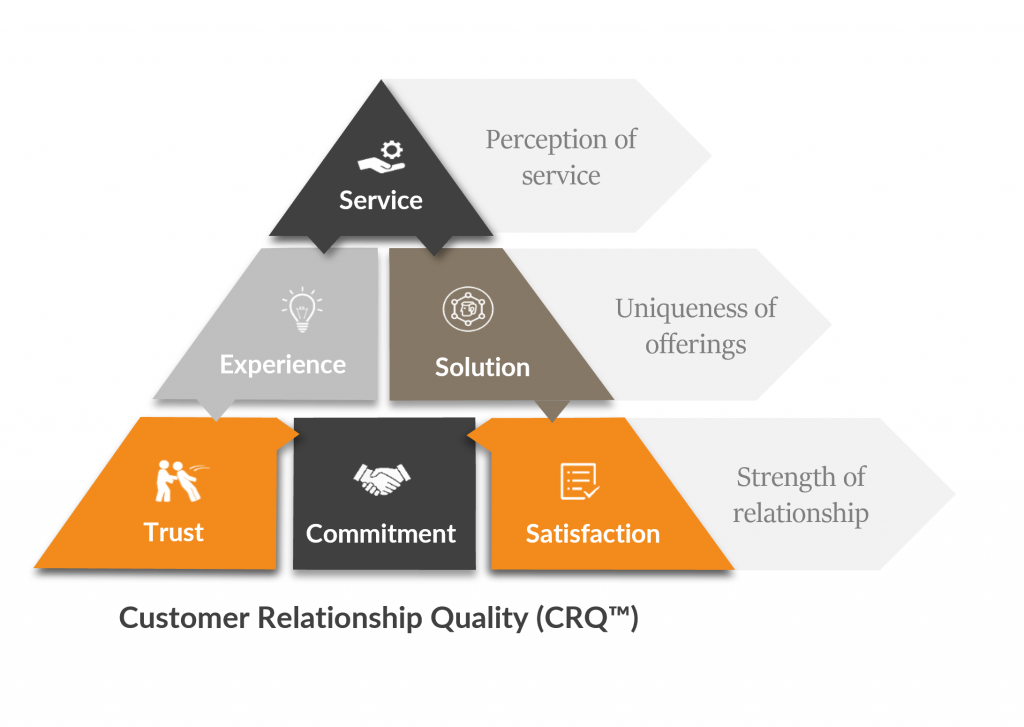
An alternative to asking the one-dimensional NPS question is to view the customer relationship more holistically. That’s where Customer Relationship Quality (CRQ)fits in.
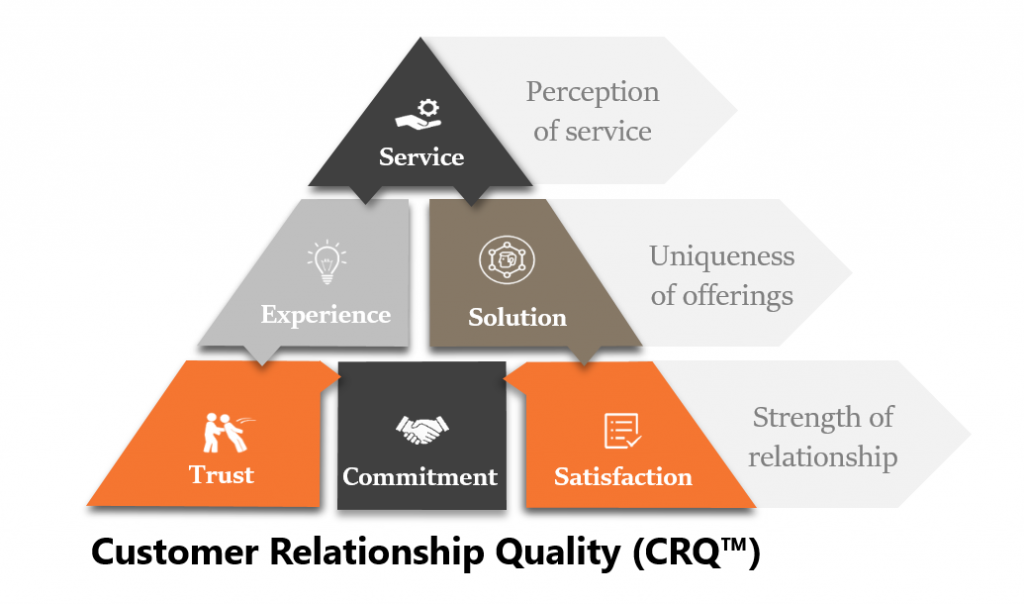
CRQ can be visualised as a pyramid comprised of three different levels.
The first and most fundamental is the Relationship level. Do your clients trust you, are they committed to a long-term relationship with you, and are they satisfied with that relationship?
The second is the Uniqueness level. Do your clients view the experience of working with you, and the solutions you offer, as truly differentiated and unique? Do they see us as good value for money?
At the top of the pyramid is the Service level. Are you seen as reliable, responsive and caring? Get this wrong and you will never be seen as Unique and you will struggle to build a long-term relationship with that client.
Interestingly, CRQ and NPS scores are highly correlated. If you score well on all six elements of this Customer Relationship Quality (CRQ) model, your clients will act as Ambassadors, generating a high NPS result for you. However, CRQ gives you so much more information to act upon, and that’s far more important.
The most important part: Action
The CRQ model above was specifically designed for the B2B world. That said, it really doesn’t matter what questions you ask your clients if you fail to do anything with their feedback.
The most important part of any NPS, CRQ, CX or client listening programme is the ‘Action’ piece. The reason that many customer programmes fail to deliver is that they are run by the Marketing department (sorry guys and gals!) while the members of the company’s Senior Management Team have collectively washed their hands of any responsibility for acting on that client feedback.
In most B2B organisations, key client relationships are owned by Sales. In some cases where delivery is an ongoing function, it’s the Service or Operations functions that have most of the day-to-day client contact. It’s rarely, if ever, somebody from Marketing. The Sales Director (or Service/ Operations Director) needs to own the ‘Close The Loop’ element of the programme. It’s unfair to expect Marketing to take responsibility for it.
Put it another way: it’s madness to think that Marketing can effect change on its own. That’s a Leadership function. I’ve never seen a successful NPS ar CX programme that has not been driven from the top. So regardless of what you think of NPS as a B2B metric, don’t assume that NPS or any other set of survey questions is going to improve your top line or your profitability. It won’t, unless there’s follow-up action. That action needs to be managed systematically, and it needs to be driven by the SMT or Executive Team.
Finally, do remember that it’s not about the score. It’s about using that valuable client feedback to take action and become more customer-centric. That’s how you generate more revenues and boost profits.
This blog is a shortened version of The CX Factor which originally appeared in the October 2021 edition of Modern Lawyer. Modern Lawyer is published by Globe Law and Business.
There’s a lot of talk at law firms about client relationships. For many clients these can still seem hollow words based on one-way relationships.
Robert Millard and John O’Connor explore how firms that are trying to embrace true client centricity are setting themselves apart.
* * * * * * * * * * * * * * * * * * *
The CX Factor
Much has been written over the years about how difficult it is for clients to differentiate between one law firm and the next. From a client perspective, law firms all look remarkably similar. Trust, reputation and brand generally play an unusually important role in buying professional services.
Appearing in directories such as Chambers & Partners, Legal 500 and International Financial Law Review are also important as are word-of-mouth recommendations. These are recognised to be among the most compelling means of winning new clients.
But what keeps clients loyal? What drives client relationship longevity? Except for the most complex or unique of matters, a range of firms exist from which clients can choose. Those firms are all staffed by highly competent, capable lawyers.
Making the Transition from Client Listening to Customer-Centricity
Within ranges, all charge roughly similar fees for similar matters. All are highly attentive to service quality. Most engage in at least some form of client listening. They claim to mould their services and service delivery channels around the needs of clients. But have they?
In our opinion, few have transitioned from client listening to becoming truly customer-centric.
This article is aimed at helping law firms to make that transition. The content is based on client- centricity work that John O’Connor has done with many large corporates and financial institutions, including DWF Group plc. It is also based on Robert Millard’s unparalleled understanding of modern law firms.
It was informed by interviews with Baker McKenzie LLP (Ana-Maria Norbury and Deanna Gilbert), DWF Group plc (Zelinda Bennett), Shoosmiths LLP (Peter Duff and Gaius Powell) and Travers Smith LLP (Julie Stott and Charlie Rogers) about their CX journeys. All of these were exceedingly generous with their time and insights. We thank them most sincerely.
Clients’ Demands are Shifting
Across many industry sectors and geographies, customers are shifting the ways in which they choose suppliers and service providers. Current research in the United States shows that the percentage of clients recommending law firms is at an all-time high of 69%. That’s up from 49% in 2020 and from 47% in 2019.
This increase is remarkable. But those results are not from superb skill in solving legal problems alone – the focus on service quality has given way to one of client experience (CX). For all but the most complex and difficult of services, service quality is no longer a source of sustained competitive advantage. It is a prerequisite to be even considered.
Clients now demand that their experience with the firm advising them be hassle free, transparent and even emotionally uplifting. They also expect law firms to look further than the legal advice. They expect them to help solve business problems.
Law firms are changing their business models in line with these shifting client requirements. But too slowly, in our view. The time has come to accelerate. Bluntly, modern law firms must move from client listening to more detailed conversations, and act decisively on what they discover.
No UK law firm has what a leading corporate or financial service client would acknowledge to be a world-class CX programme, or true customer-centricity. Pockets of excellence do exist though, and some of these can be seen in the case studies at the end of this article.
CX is Different to Service Quality
The concept of ‘quality’ emerged from the total quality management (TQM) movement of the 1950s. In the early days, the focus was on product quality. The emphasis moved in the 70s and 80s to service quality as economies in the western world became more services-based economies. ‘Client satisfaction’ became a prominent metric.
Client experience (CX) is different. It means that a firm’s core focus is on its entire relationship with its clients – not just on satisfaction. Contemporary research shows that CX is generated through a long process of interaction between a firm and its clients, across multiple channels and through generating both functional and emotional effects.
To achieve this requires ‘client-centricity’ which, in simple terms, means putting clients at the very heart of the firm. This transcends quality, to mean all the firm’s lawyers and business services professionals viewing every aspect of the firm from the client perspective. In this article, we use the terms ‘client centricity’ and ‘CX’ interchangeably.
For clients, quality assurance is difficult in legal and other professional services. Lawyers and other professionals frequently have more knowledge of the topic in hand than do their clients. This creates a ‘power asymmetry’. Work product is frequently co-created with clients, or at least based heavily on client inputs. Consistently poor performance leads inevitably to reputational damage, sanctions for professional negligence and, ultimately, failure.
The Intangibilty of CX in the Legal World
That much is clear. How, though, does a client assess whether services rendered in a specific matter were merely ‘good’, or ‘excellent’?
It turns out that it is far easier for clients to assess how they feel about the services and about their experience, than the objective quality of the service received. Clients must trust the professionals that they instruct to be technically competent and diligent. Such trust is not necessary to assess their reaction to their experience – their ‘gut-reaction’ – to dealing with the firm and the way in which the firm deals with them.
At an event held at White & Case’s offices in London some time ago, the former chairman of Allen & Overy (A&O), David Morley spoke of a very complex, challenging transaction where A&O was pitching for the legal advisory work against the usual range of premium London law firms. A&O won the engagement and, he said, he was later told by the client’s general counsel that the reason for that was that they felt that when, late at night in the midst of the deal when pressures were immense, they believed that A&O’s lawyers would be the easiest to deal with.
This is an excellent example of how intangible CX can be.
Professional Services are Different
Professional services have always been recognised as being distinct from products, and from other types of services. More than two decades ago, professional services were defined as:
highly knowledge intensive, delivered by highly educated people, frequently linked to cutting-edge knowledge;
involving a high degree of customisation;
involving a high degree of discretionary effort and personal judgement on the part of the professional creating and delivering the service;
requiring substantial interaction with the client; and
being delivered within constraints of professional norms of conduct, including setting client needs above profit and respecting the limits of professional expertise.
For much of the past century, this has been an accurate description of the services delivered to clients by lawyers. Ask any lawyer if they are concerned about their clients, and the quality of services that they deliver to them, and the answer will almost always be: “of course I do!” And that response would be sincere and truthful – to the extent even that the question might be regarded as facile.
Commoditisation
Yet the statistics for clients defecting to rival firms in recent years have been alarming. Legal services are also changing. On the one hand, the complexity of legal issues increases continually and exponentially.
On the other, it is becoming difficult to justify including the more process-driven ‘commoditised’ services under the umbrella of professional services. This does not mean that law firms need to discard these services. They form an important part of the business of many law firms.
The term for services that are not ‘professional’ is not ‘unprofessional’. It’s ‘technical’. The fact is that clients view technical legal services through a different lens, and the profit drivers of these services are different to those of professional services. The firm’s business model needs to be more granular if the tensions between these client expectations and profit drivers are to be managed.
As the ‘4th Industrial Revolution’ unfolds, more of the services now delivered by people will be better delivered by technology. Some lawyers will focus on using ever-more complex technological tools to advise clients on meeting their own increasingly difficult, complex needs. The business of law is also being disrupted by emerging digital technologies and the geo-economic impacts that they spawn. Some firms will build highly profitable legal service platforms (LegalZoom being a good current example) to focus on more mainstream legal needs. Best CX practice will evolve differently for each.
These tensions can and must be managed. CX has proved a valuable tool for banks, retail organisations, airlines and others to improve levels of customer satisfaction. It is now gaining rapid traction with law firms and might even be a new frontier on which law firms are competing. Many firms, however, appear to be struggling to separate the concept from similar ones such as ‘service quality’ and ‘client relationships’ and ‘client listening’.
What to Measure?
Metrics are obviously crucial. One of the best-known CX metrics is Net Promoter Score (NPS), created by Fred Reichheld based on his work at the consulting company Bain & Co. In his book The Loyalty Effect, Reichheld stated that clients should be valued according to the net present value (NPV) of the future revenues to be earned from them. This has given rise to the notion of client lifetime value (CLV).
NPS is based on the proven premise that client relationship longevity can be predicted by a client’s response to a single question: “how likely would you be to recommend our firm to a friend or colleague?”
Reichheld’s research showed that surprisingly high NPS scores are required to indicate long-term client loyalty. The NPS of a firm overall is calculated by subtracting the percentage of clients who allocated a score of 6 or less (Detractors) from the percentage who allocated a score of 9 or 10 (Promoters).
But is NPS the best metric for law firms? We mentioned earlier how A&O won an engagement based on the general counsel’s level of Trust in the firm’s ability to deliver when the going got tough. Few companies measure trust explicitly – yet it is the fundamental building block of any client relationship.
Customer Relationship Quality (CRQ)
An alternative to NPS is to view the client relationship more holistically. Client relationship quality can be visualised as a pyramid comprised of three different levels (see Figure 1).
Figure 1. The Customer Relationship Quality (CRQ) model
Three levels of Customer Relationship Quality
The first and most fundamental is the Relationship level. Do your clients trust you, are they committed to a long-term relationship with you, and are they satisfied with that relationship?
The second is the Uniqueness level. Do your clients view the experience of working with you, and the solutions you offer, as truly differentiated and unique?
At the top of the pyramid is the Service level. Are you seen as reliable, responsive and caring?
If law firms score well on all six elements of customer relationship quality (CRQ), their clients will act as ambassadors, generating a high NPS.
NPS and CRQ scores are highly correlated. Law firms should track their NPS but in order to understand what that is really telling you – and what you have to do to improve that score – law firms also need to measure and understand all six elements of the CRQ model.
Turning ‘Client Listening’ into an Effective CX Programme
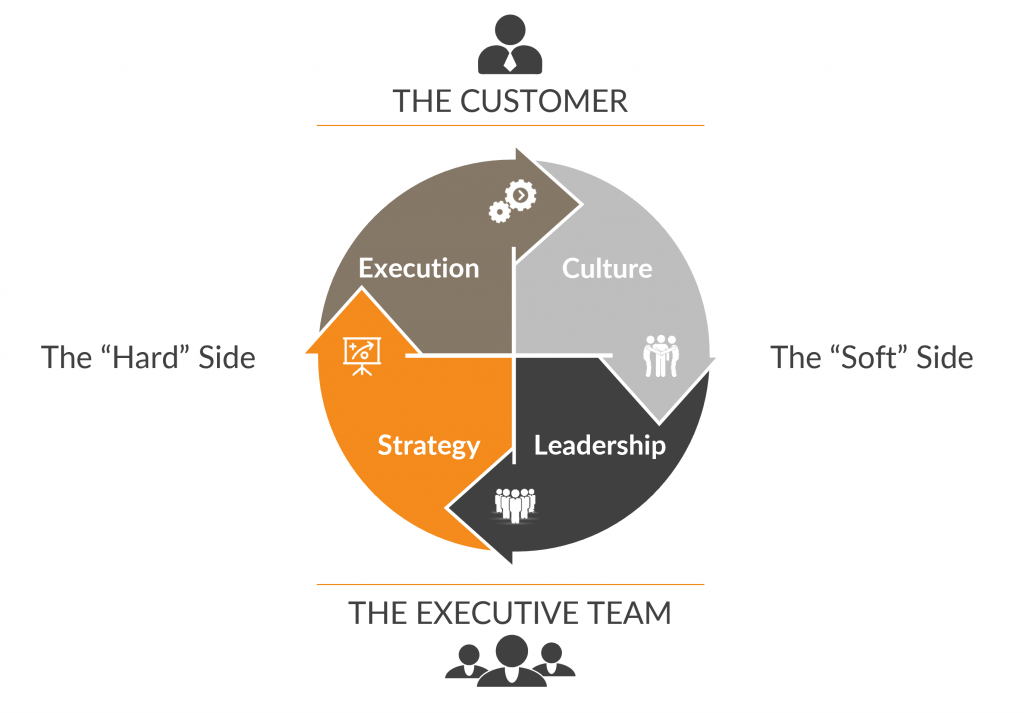
Client listening is obviously more than just the score and the verbatim feedback that is captured. A fully-fledged CX programme is also far more than a client listening survey. It includes what we refer to as ‘hard side’ and ‘soft side’ activities (see Figure 2).
Figure 2. Deep-Insight CX framework
The four quadrants are:
LEADERSHIP. The most important quadrant. Good customer excellence (CX) programmes are always led from the top.
STRATEGY. Good CX programmes link customer, product, operational and organisational strategy explicitly to customer needs.
EXECUTION. Success requires properly resourced teams that are brilliant at executing the strategy.
CULTURE. Finally, customer excellence must become integral to the DNA of the organisation: “it’s how we do things around here”.
The hard side activities of Strategy and Execution are important. These include setting up the CX programme, determining what to measure, executing the survey process, and using the client feedback to update company strategy. However, one of the key lessons from interviews with corporate leaders is that successful CX programmes require heavy investment in ‘soft side’ activities if they are to generate real long-lasting results. This means spending significant amounts of time with law partners and client teams planning for success.
All four quadrants are necessary for a successful CX programme. Many law firms start at the execution quadrant and are often disappointed when their client-listening programme produces no meaningful result or change. In our experience, the soft side is often overlooked and almost always under-resourced. Leadership is the most important quadrant while culture is the most challenging.
Step 1. Drive change from the leadership level
Client relationship longevity is a crucial building block of the firm’s client value proposition (CVP). It deserves the attention of the firm’s most senior leaders. Without active and highly visible senior leadership support, a firm is unlikely to achieve the CX results that they need to build sustained competitive advantage. It is crucial that the firm’s leaders themselves be truly client-centric. The must:
Be genuinely passionate advocates for the firm’s clients and their interests;
Take personal ownership of enhancing client- centricity in the firm;
Have an intuitive understanding that client satisfaction drives financial success;
Use client-centricity as a lever to effect organisational change; and
Be relentless about execution.
This list might appear daunting, but it is crucial. Too often, a firm’s CX initiatives founder because the task is delegated to mid-level teams who have no more than lukewarm support from senior leadership. The result? They are unable to drive the degree of change that can really make a difference. The need for active and visible senior leadership support is evident in the comments of Peter Duff, chairperson of Shoosmiths, in Case Study 1.
Step 2. Link Strategy Explicitly to Actual Client Needs
Once the leadership for the CX programme has been secured, the law firm must use the voice of the customer to drive all aspects of the firm’s strategy. This can, and often will, involve major organisational and operational change. It will also require changes to the firm’s business model (CVPs, resources and profit model). O’Connor and Whitelaw devote an entire chapter of their book Customer at the Heart to the strategy of client-centricity.
In Case Study 2, Zelinda Bennett speaks of some of the major strategic changes that DWF Group have made in order to serve their global clients more effectively. Reorganising the business into global divisions and acquiring an alternative legal services provider (ALSP) were bold and decisive actions taken precisely because DWF wanted to become more client-centric.
Strategy must involve all aspects of the law firm’s business. It includes HR (hiring, training and promoting the most client-centric lawyers) as well as finance (investing only in initiatives that will have a demonstrable impact on clients). It must pervade the entire organisation. Every department in the law firm must see its role through the lens of the client.
Step 3. Build a CX Execution Capability
Besides strong leadership, a successful CX initiative also requires an ‘execution’ capability to ensure that the voice of the client is both captured correctly and acted upon. Execution is more than setting up a client listening post. It involves turning the outputs from those client conversations and collaborative explorations into tangible actions that solve real client problems.
In today’s world, the client personnel involved in buying and consuming legal services extend far beyond the legal department. The client’s voice needs to extend beyond just the GC and her or his legal team. Law firms must think about the ‘influencers’ who are telling those decision makers that “We have to work with Firm X” or “Firm Y really aren’t delivering value for money – we should be looking elsewhere”.
One of the better examples of a good execution capability is Baker McKenzie’s Reinvent programme (Case Study 3). Reinvent started by using client listening to map existing client interactions with the law firm – ‘journey mapping’ as it’s often referred to – but then moved to the next logical level. Baker McKenzie started working with clients to re-engineer processes and even co-creating new services and solutions. The Reinvent programme was developed to establish the governance, skills and infrastructure required to support better client outcomes. This programme focuses both on re-engineering specific processes and services with clients, as well as a way to develop teams across the firm – empowering execution at a grassroots level. Such an approach is a highly effective way to build engagement with the CX process and commitment to its success.
Step 4. Embed Client-Centricity into the DNA of the Organisation
Lawyers are consummate professionals. But are they truly client-centric? Most legal professionals entered the legal industry to practise law. They wanted to advise clients and to mitigate risk. They didn’t join to help CFOs and procurement professionals to cut costs. However, that’s what partners in law firms are being asked to do these days.
Embedding behaviour changes and aligning the firm’s culture with the ‘voice of the client’ takes patience, persistence and continuous effort over a long time. Engagement with clients must be ongoing. Building and sustaining the momentum required to be true client-centric needs a constant stream of input from clients. It also requires constant conversations within the firm about what that input means, and how clients can be better served.
In Case Study 4, we look at Travers Smith’s ability to embed the culture of client-centricity into the DNA of the firm. Silos have been broken down. Close collaboration between lawyers and business services has been achieved. International clients are serviced almost seamlessly. The firm’s senior leadership takes a very active lead in this.
The reason why most law firms are lagging behind might be not that they are inattentive to clients (that is usually patently not the case). It is more likely to be that they simply do not have the systems and processes in place that are required to get input of the quality and detail that can drive continuous improvement. A properly designed CX programme delivers that. Over time, measurable results emerge both in terms of client loyalty (NPS and CRQ scores) and also, more importantly, economic performance.
Conclusion
Earlier, we said that many companies start with Execution. We strongly believe that the first step in a successful CX programme is gaining the right Leadership commitment to putting the client at the heart of everything a law firm does.
Once that leadership is in place, it becomes easier to get the law firm’s strategy aligned to what clients actually need and the CX execution tasks become much easier. With leadership, strategy and execution in place, culture change automatically follows.
As David Morley’s earlier anecdote reveals, the primary impactors of CX emerge when things go wrong. Clients report four major areas where the law firms that advise them are inconsistent, namely: keeping them informed; dealing with unexpected changes; handling problems; and meeting scope. Feel free to work on these immediately, of course.
But if you want to achieve a step change, that starts at the top.
‘Hunting elephants’ is a term used by sales people to describe the targeting of very large clients. Elephant hunting is difficult to do, but very profitable if you’re successful. The message from this blog? Forget elephants; hunt whales instead.
Whale Hunting with Global Accounts
It’s not often that I write book reviews but if there’s one book on sales management you should plan to read before the end of the summer holidays, it’s Whale Hunting with Global Accounts.
The author is Barbara Weaver Smith, but the book itself has contributions from 14 different experts in global sales. The result is a wonderfully rich, practical – and sometimes quirky – handbook for global sales management and leadership.
The quirkiness of the book comes from the title and inspiration for the book – the Inuit people.
The Inuit People
Here’s how Barbara Weaver Smith introduces the book:
For thousands of years, the Inuit people of the frozen North have risked life and limb to hunt the biggest game on earth: the mighty whale. They endure treacherous seas, frigid temperatures, and deadly ice floes for days at a time in order to catch these elusive and massive mammals. Why risk so much when they could have fish and caribou so much more easily? Because a single whale can provide a village with food and oil to last an entire year.
Would you hunt small game day-in and day-out, when you could hunt the biggest prize of them all every year?
It’s the same in the sales business; small fish will keep you fed but landing each whale-size account can fill your corporate belly for years. Hunting the biggest, most profitable deals is no easy task, and if your target escapes, you’ll lose time and resources. But the payoff is almost always worth your risk and effort.
Leave aside the quirkiness of the title and the references to the Inuit people. This book has contributions from a range of people who have ‘been there and done that’ in the sales world. Barbara Weaver Smith has assembled their views and her own thoughts on global account management into a structured approach for going after and hanging onto large complex accounts.
Key Takeaways
I always find it difficult to summarise a 240-page book in a few sentences but for me the four key takeaways are:
Knowledge. Global account teams need a massive store of knowledge about their target company and its market, as well as about industry and business challenges. Many sales reps go into a meeting with executives at a global company, armed only with their own product materials.
Structure. You can’t sell to and service large complex organisations unless you are well organised on your own side. The way you structure your own sales organisation must arise from a deep understanding of your client’s needs and preferences.
Process. This one is more interesting as it’s counter-intuitive. The more complex the sale and the longer the sales cycle, the more likely that sales people need to follow their own intuition rather than stick with the standard structured company sales approach.
Vision. Your company’s vision needs enough power to lead your customers through the challenges of consensus-building, the pain of change, and the inertia of bureaucracies.
Where KAM and GAM are Currently Failing
‘Whale Hunting with Global Accounts’ resonated strongly with me because it examines many of the challenges that I see within our own B2B clients. There’s no getting away from it: Key Account Management (KAM) and its big brother Global Account Management (GAM) are challenging activities.
Using the same four headings:
Knowledge. Many key (and global) account teams simply don’t understand their clients as well as they need to. It’s not easy if you have a client that operates in 20 different countries and people in all 20 have a view on your products and services. But you need to find out exactly what they think. Key account managers should not just be order-takers. They need to be information-gatherers, orchestrators and coaches. Yet many of our clients at Deep-Insight have excellent order-takers performing key account management roles. Square pegs and round holes.
Structure. I’m always surprised to discover just how product-centric many of our clients still are. Key accounts often have different product-based sales teams approaching them in a completely uncoordinated fashion. When key accounts are international – in other words, global – many of our clients are further stymied by their own national organisation structures. National structures do not support or encourage cross-border collaboration.
Process. Here’s one good example: Companies put processes and KPIs in place for key account managers. We have already seen that key account teams need a wealth of feedback from multiple individuals in each account. However, they are often given Net Promoter Score (NPS) and Customer Relationship Quality (CRQ) targets that incentivise them to REDUCE the number of contacts they get feedback from. Why? New ‘Decision Makers’ and ‘Influencers’ are likely to give poorer scores than existing ‘Operational’ contacts.
Vision. Many companies think they have a vision that key and global account teams buy into. The reality is that every three months, that vision gets completely blurred by the requirement to hit quarterly sales targets. Cooperation and collaboration are pushed into second place. Long-term planning is abandoned as long-term account strategies struggle to survive the relentless demands of a quarterly sales culture.
All these things need to change.
Forget Elephants; Hunt Whales Instead
‘Whale Hunting with Global Accounts’ may not answer every question a Global Account Manager has. No individual book can but this one does provide an excellent framework for thinking about how to do GAM and KAM effectively. More important, it’s grounded in the real world and provides the CEO and Sales Director with a clear overview of the pitfalls of implementing GAM structures, processes and organisations.
It’s a worthwhile addition to any salesperson’s bookshelf.
So buy it. And remember: Forget elephants; hunt whales instead.
Every year we follow our own advice. We ask ourselves and our clients: “How did we do?” Just like our own clients, we never quite know what to expect until all the numbers are in and until we have read all the verbatim comments.
It’s always nerve-wracking waiting for those results to come through. We might think we know what clients are going to say but we’re never 100% certain. It was especially true this year given that the last 12-15 months have been unprecedented. We have all moved to new ways of working. Business is conducted differently these days.
This year, we also spread the net for our Customer Relationship Quality (CRQ) assessment very wide. We didn’t just limit it to the key decision makers and teams that we work with on a day-to-day basis. This year we canvassed the views of people who use the outputs of our CRQ and ERQ (Employee Relationship Quality) services. For example: account directors and service managers who use our Account Reports and results to build better relationships with customers; divisional heads who use the outputs to inform strategic direction and investments.
We wanted to understand what they think of the tools and consultation we provide and if it really helps them in their roles.
How did we do?
So how did we do?
And what do those numbers 55, 55, 5.9 and 81 at the start of the blog mean?
55
The first number is our response rate. Fifty five percent of the people we asked gave us 10 minutes of their time and completed the assessment. That’s not bad but could have been higher. Some of our clients achieve response rates of 70% or greater.
55
The second number is our Net Promoter Score. It’s the second time we have scored above 50. The actual breakdown is 58% Promoters; 39% Passives; 3% Detractors and the NPS calculation (percentage or Promoters less the percentage of Detractors) gives us our NPS score of +55.
5.9
The third is our CRQ score and that’s the second highest we have ever achieved. It’s on a 1 to 7 scale. An typical CRQ score for a European B2B company is a little above 5. A score of 6 is almost impossible to achieve (at least in Europe!)
81
The final number is the percentage of Ambassadors we have. In many ways, this is the most important number of all. It means that four out of every five clients believes that Deep-Insight offers something truly unique. You trust us and you think our service is second-to-none. This bodes well for long-term relationships with each of these clients.
Our New Approach – Workshops and Support
These are some of the best scores we have ever achieved and when we read through the verbatims, it’s clear to me that one of the key reasons for the high scores is the fact that over the past 12 months we have changed the way we work with clients.
In the past, you told us you needed more consulting support to get the maximum benefit from the customer experience (CX) and employee experience (EX) programmes we run for you. In particular, you asked us to provide more consultancy support in turning insights into action. We now do that by:
Running workshops to ‘onboard’ the leadership teams to the CX or EX programmes
Holding CX workshops with customer-facing teams before we ever think about contacting your clients and staff
Spending more time with account directors/ service managers to get commitments from customers to provide feedback
Doing the same after that feedback has been given and collated – to ‘close the loop’ with those customers
It was a new process for us last year and you are now telling us that it works. We thought it might, given that we have 20 years of experience in helping companies build and run CX and EX programmes. But we honestly didn’t know until we asked you.
“Are we there yet?”
While we’re really proud of these scores and the comments that accompanied them, no, we’re not there yet. Here are three things we need to do to get there over the next year:
Engage with clients/ individuals who did not provide feedback. While 55% is a decent response rate, a few of our clients gave us a limited amount of feedback. I’m pretty sure that, had they completed the survey last month, our scores would be lower. I believe we still have some work to do to improve the relationship quality with these clients so I will personally be reaching out in the coming days to talk to them about where we may be falling short.
Consider even more CX and EX support. You have asked for even more help to turn insights into action with your customers. We are committed to helping you achieve that, and will pick up the subject with you when we meet with you to ‘close the loop’ on this year’s client assessment.
‘Closing the Loop’ with our own clients. The final thing we need to do with all of our clients is to discuss their own specific feedback on our performance with them. We will be in touch shortly with each one of our clients. We will be asking for time to discuss each client’s specific results and feedback. Our objective is to agree a set of actions with each client that will improve the value we deliver in the coming 12 months. I’m personally looking forward to those conversations.
Thank you again – and expect a call from us
Finally, I genuinely appreciate the time you have taken to give us your feedback.
I must also say a big thank you to our own team in Deep-Insight who have managed to weather the stormy waters of the last 12-15 months. They continue to deliver an excellent service to our clients (your words, not just mine). In particular, I need to thank James Kind for planning, organising and running this year’s “Deep-Insighting Ourselves” assessment.
James joined us in March last year and no sooner had he stepped inside our offices, we shut them down due to COVID. Like many other people out there, James knows his colleagues primarily through Teams and Zoom meetings. I’ve been impressed at how he – and everybody else in Deep-Insight and our clients – has adapted to working from a laptop in an attic, shed, kitchen or bedroom.
In the coming months, all that will change as vaccines get rolled out globally. I don’t believe we’ll ever go back to our old ways of working but that might not be a bad thing.
So, well done James, and thank you to all of our clients. We’ll be in touch with you shortly to discuss your results and agree some follow-up actions.