It’s Good to Talk. If you’re as old as I am, you’ll remember the British Telecom (as BT was then known) TV adverts with this tagline. It was an incredibly effective advertising campaign which helped change consumers’ perceptions of the organisation.
As it so happens, the same tagline is relevant to the sales and account management communities too. Let me explain by using an example from the corporate banking world.
Relationship Managers
Corporate banks don’t employ account managers to manage their major accounts. They employ Relationship Managers or RMs. Words are important. Banks tend to take business relationships more seriously than other industries. This is partly because an intimate knowledge of the customer is critical when making lending decisions.
One of our clients is a large European bank. The MD of the Corporate and Business Banking division prides himself on the level of service provided to his customers. For him, service begins with regular contact. The vast majority of corporate and business clients see their RM every three months or more frequently.
The MD asked us to test this, so we did. We asked his clients how frequently they saw their RM. A small percentage (4%) of the bank’s clients claim they never saw their RM and a similar number said they met the RM annually. 9% saw their RM every six months; 22% every 3 months and the majority (56%) said that their RM was in contact with them on a more frequent basis.
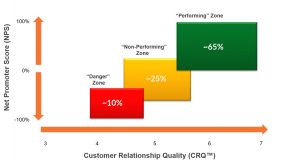
What we hadn’t predicted was that frequency of contact has a huge impact on the quality of the banking relationship. We call this Customer Relationship Quality. It also has a huge impact on the bank’s Net Promoter Score (NPS).
It really is good to talk
A quick analysis of Net Promoter Scores by frequency of contact is telling.
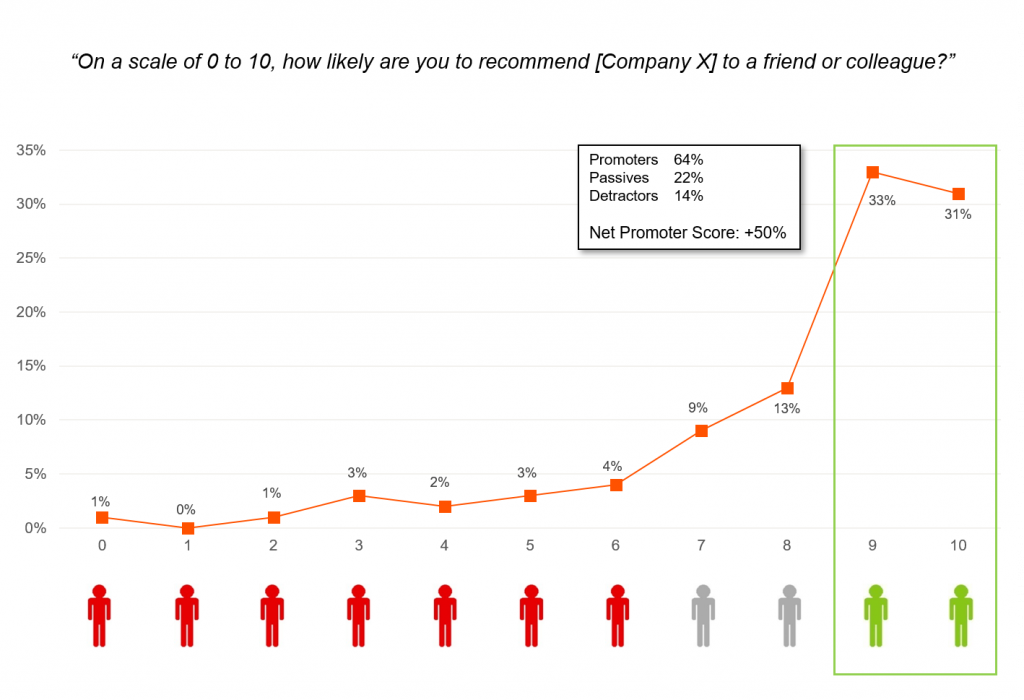
The bank’s overall Net Promoter Score is 28% which, for European B2B companies is good (see another blog here).
When RM visits are conducted only on an annual basis, or not at all, the Net Promoter Score is deeply negative – minus 70% for the 4% of clients who claim they never see their RM.
However, for the majority of clients who are in contact with their Relationship Manager every 1-2 months, the Net Promoter Score is a whopping +51%.
There is a very simple message here. If you want to have better relationships with your clients, go and talk to them more frequently than you currently do.
Get in touch with us today if you want to find out a little more about customer centricity.
Most of Deep-Insight’s work is based on helping large international B2B organisations run effective Customer Experience (CX) programmes.
The key to running a good CX programme is understanding how to change the culture of an organisation to make it truly customer-centric, and that has to be based on regular high-quality conversations – both formal and informal – with your B2B clients.
Without regular client feedback, sales directors and account teams will not be in a position to address small issues before they escalate to a point where they damage or destroy the client relationship.
When we plan Customer Relationship Quality (CRQ™) assessments for our clients, one of the questions I regularly get asked is “How many of our clients should we sample?” The stock answer that I’ve been using for the past decade is “Think Census, Not Sample”. In other words, get feedback from your entire client base – every single one – and it’s the answer I still use.
It’s not meant to be a glib response but there are a few subtleties underpinning the answer that are worth exploring.
TRADITIONAL APPROACH TO SAMPLING
Many market research and customer insight people – even in B2B organisations – tend to approach the subject of customer feedback from a consumer perspective, where there are tried and trusted approaches for surveying large customer bases, or “populations” to use the technical term. If you’re not that familiar with these approaches or terminology like random sampling, margins of error and confidence levels, have a look at the Box below.
MARGINS OF ERROR, CONFIDENCE LEVELS AND SAMPLE SIZES – TRADITIONAL APPROACH
If you’re not a market researcher or statistician, don’t worry – there are plenty of good primers on the Internet explaining the basics of sampling techniques and associated terms – here’s one from YouGov.
You’ll also find several handy little calculators on the Internet (here’s a link to one) which let you know how many respondents are required for a particular population (customer base) in order to give a confidence level and margin of error. From this, it’s easy to calculate the number of individuals you need to invite to participate in a survey in order to get a robust answer.
Most opinion polls are conducted with a random sample of at least 1,000 people and here’s the reason why: pollsters like to be confident that their results are within a margin of error of 3% or less. Supposing the voting population in a country is 10 million people. Plug that number into our online calculator and we see that a 3% margin of error and a confidence level of 95% requires a sample of 1,067.
All that is fine if you’re working in a consumer environment or if you have tens (or hundreds) of thousands of SME customers. However, the traditional sampling techniques have less value when you are a B2B organisation and the vast proportion of revenues is generated by a handful of large clients. There may be a “long tail” of smaller customers but in most cases the Pareto Principleapplies, whereby 80% of revenues are generated by 20% of clients. In some cases, the ratio can be 90/10 rather than 80/20. In such cases, the old traditional sampling approach needs to be chucked out of the nearest window and a different set of principles applied.
THE DEEP-INSIGHT APPROACH – FOLLOW THE MONEY
Our approach is to be pragmatic and follow the money – concentrate on those clients that generate the majority of the revenues, and do a ‘deep dive’ into those relationships.
It’s probably easier to explain using an example.
Case Study – Large UK Services Company Revenues: Over £1 billion Key Clients: 100 One of Deep-Insight’s UK clients has over 10,000 employees and generates annual revenues in excess of £1 billion. However, its customer base is actually quite small and the contracts it has with these key clients are extremely large. The company has several hundred clients in total but the vast majority of its revenues come from the ‘Top 100’ and even among the ‘Top 100’ the revenues are skewed heavily towards the 10 largest clients.
So how do you run a CX programme when your client base looks like this? In that particular case, the company has chosen to focus exclusively on its ‘Top 100′ clients. Purists might argue that this is not representative of the full customer base. This may well be true but it definitely is representative of the full revenue base, and that’s the commercial perspective of “following the money.”
From a pragmatic perspective, it makes little sense to take a sample of the Top 100 clients. You should attempt to get feedback from every single one and ideally you want to get a wide representation of views from across each of those 100 clients.
Even from a statistical perspective, it makes little sense to sample – if you need convincing, have a look at the second Box below.
APPLYING THE DEEP-INSIGHT APPROACH
Suppose there are 10 key individuals (at most) in each ‘Top 100’ client whose feedback is really “important” (in other words, the decision-makers who will renew the current contract when it’s up for renewal) that’s still only a population of 1,000 individuals across your Top 100 clients – run the numbers and you’ll see that you need to include all, in order to get a statistically significant sample.
Let’s plug those figures from our Case Study into the online calculator and see what happens.
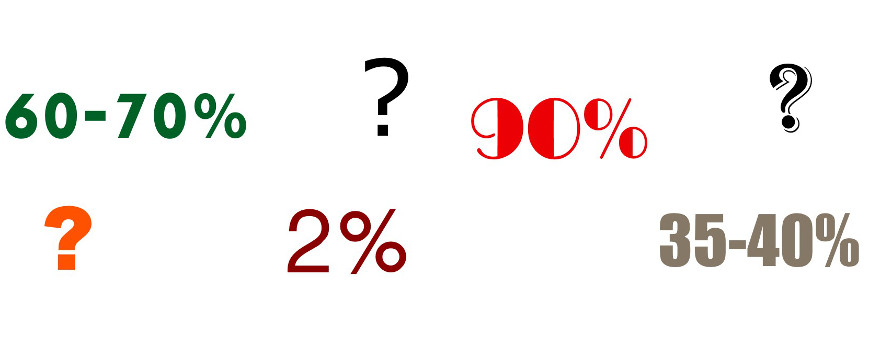
For a population of 1,000 decision-makers, we need 278 responses to get a robust score (robust being a margin of error of 5% and a confidence level of 95%). Deep-Insight will typically achieve completion rates of 35-40% from its online B2B assessments so that means we need to invite 700-800 of those 1,000 key individuals to participate.
If you think a margin of error of 5% is too high, then plug in 3% into the online calculator. Now the number of responses jumps to 517 out of 1,000. This means you DEFINITELY need to invite all 1,000 to participate to get anywhere near your target margin of error.
Successful CX programmes in B2B companies are not built around statistics. They are built around empowering staff and providing account managers with all the customer feedback they need to manage client relationships more effectively. That means getting feedback from ALL individuals in those key clients and working really hard with the account teams to get participation and completion rates as high as possible.
So when you’re planning your next Customer Relationship Quality (CRQ™) assessment, remember to get the account managers involved and “Think Census, Not Sample”.
We’re coming to the end of another year and all in all, it’s been a good one for us here at Deep-Insight.
We are an Irish company – and proud of it – but our client base is international. Over the past 12 months, we have carried out customer and employee assessments in the UK, Netherlands, Poland and Australia as well as in our home market. That said, one thing that I have noticed in 2015 is a marked increase in activity from local companies. The Irish recovery is definitely under way.
NEW FACES
Jamie Jaggernauth
We’ve had a particularly busy year at Deep-Insight and as a consequence, there are a few new faces in the Cork office these days.
We’re delighted to welcome Jamie Jaggernauth, who is our latest addition to the Deep-Insight team.
Jamie hails from Trinidad and has worked in a variety of research roles in the Caribbean, UK and Ireland before joining Deep-Insight.
NEW CLIENTS
We also added a few new names to our client list during 2015, ranging from large well-established firms like the health insurer VitalityHealth in the UK to newer digital organisations like DoneDeal, which is Ireland’s biggest classifieds site (and which is part of the Norwegian-headquartered Schibsted Media Group).
In fact, DoneDeal celebrated its 10th birthday this year so a big happy birthday to John, Cathal, Kristian, Simon and the rest of the DoneDeal crew!
DEEP-INSIGHT’S OWN CUSTOMER ASSESSMENT
Earlier this month, we asked you what you thought of your relationship with us.
Now, I must admit I awaited these result with some trepidation. We think we deliver an excellent service to our clients but it’s always slightly scary waiting to hear what people ACTUALLY say about us and the benefits of working with Deep-Insight. It’s scary because we do take your feedback personally and it’s always a little nerve-wracking waiting for the results ton come through.
Last year, we had a Customer Relationship Quality (CRQ) score of 5.2 and a Net Promoter Score (NPS) of 17%. I was a little disappointed with those scores last year as they were down from the scores we received on our previous assessment and I felt that we could – and should – have done better.
A NPS of 17% is above average (more on average and good Net Promoter Scores here) but frankly it’s not that much above average. We had significantly higher scores in the past and we don’t see ourselves as a “slightly better than average” company. We used to be regarded by our clients as ‘Unique’ but in 2014 we dropped out of that zone. It’s a bit like a restaurant losing its Michelin Star – I was extremely keen to see if we could get back into the top bracket again this year.
So how did we do? How did you rate us?
2015 CLIENT FEEDBACK
This year, you gave us a Customer Relationship Quality (CRQ) score of 5.7 and a Net Promoter Score (NPS) of +37%.
I was a little stunned when the results came through as our NPS and CRQ scores had shot up dramatically. As many of you will be used to hearing me say at this stage, it’s quite a challenge to get your CRQ score to jump by more than 0.2 or your NPS to increase more than 10%. We had worked hard on a number of fronts over the past 12 months but the size of the improvement in scores still came as a surprise. So thank you for that vote of confidence in Deep-Insight – it really does mean a lot to us.
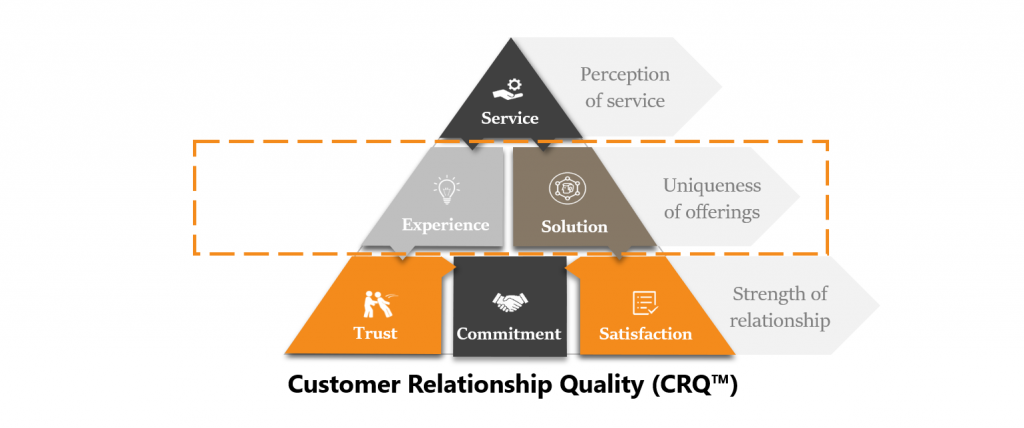
The other thing I’m particularly pleased with is the fact that we are back into the ‘Unique’ zone – that’s the light green box in the top right hand corner of the graphic. To be seen as unique, a company has to be able to provide a solution that truly solves its customers’ problems, as well as providing an excellent experience for that client. That’s something that only 10% of B2B companies achieve so it’s nice to be able to claim that accolade again.
There’s still plenty for us to work on. We’re currently analysing each and every verbatim to figure out exactly how to improve our service even further. We will be sharing these results with you as early as we can in the New Year.
LOOKING FORWARD TO 2016
So there it is. 2015 is nearly over but we have some exciting things planned for next year.
Over the past few months, Rose Murphy has been talking to most of you about what you like and dislike about our current product offering. The feedback you have given to Rose, as well as the various suggestions you have made in this recent client assessment, will help us improve what we do and how we do it.
But for the moment, allow me to say a big thank you to each and every one of you for supporting us throughout 2015.
On a personal note, I’d also like to say a big thanks to the following (in no particular order other than alphabetical): Brian, Frank, Grainne, Jamie, Mark, Mary, Peter, Pim, Rose, Yvonne as well as to the rest of the wider Deep-Insight team who have helped to deliver a fantastic service to you – our clients – over the past 12 months.
Have a very peaceful Christmas and I look forward to seeing you all in the New Year,
We run B2B customer assessments for large corporate clients in the Netherlands and elsewhere. Very often I get asked questions like this after we deliver the customer feedback to senior management:
“OK, you’ve told us what our customers think of us, but what do we do about it now?”
“Tell us what we do in the next few weeks so that we don’t lose momentum.”
So here’s what I tell them:
1. BRIEF YOUR PEOPLE.
Typically, you need to brief at two levels and both are equally important:
– Executive Team. The senior executives in your organisation need to ‘own’ the overall results. If the customer feedback is negative or requires fundamental change, only the executive team can decide on the appropriate actions.
– Account Managers. These are the people who need to ‘own’ the results at account level. They are also the people you need to set up and run the account feedback sessions (see below).
Make sure to get the senior executives to read all the verbatim comments and see if their summary of the top issues agrees with the Deep-Insight analysis (they will understand the context better than we can). The most effective way of increasing Customer Relationship Quality (CRQ) and NPS scores is to have the programme driven by the executive team. Without the drive and passion at this level, the programme will fail.
2. DISCUSS THE RESULTS WITH YOUR CLIENTS.
Typically this happens in two stages:
– Stage 1. Within 2 weeks of the assessment results being delivered, you should get a general communication to all customers that you invited to give feedback. This should include a general ‘Thank You’ message for participating in the assessment (OK, not everybody completed it – our completion rates are typically 35-40% – but let’s not be mean!) as well as a message that their account manager will be in touch to arrange a feedback session to discuss the results (the overall results plus the specific results for their account)
– Stage 2. Within 8 weeks (or whatever target you set – but you must set a target), the account managers should have completed face-to-face meetings with all key customers. Ideally, they will have used that discussion to create a ‘Joint Action Plan’ setting out what both parties need to do, in order to address any issues unearthed in the assessment. Remember that the actions are on both sides – the account manager may need the client to change certain things as well.
3. FEED THE RESULTS INTO THE ANNUAL BONUS SCHEME.
If you haven’t done so already, think about incorporating the CRQ or NPS scores into account managers’ annual targets and bonus plans. If you have done so already, pay out the bonuses! This is probably the second most important driver of success in any customer experience programme. What gets measured and rewarded, gets done.
4. PLAN THE ACTIONS.
Again, do this at two levels:
– At corporate level. These are typically the key themes mentioned in the verbatim comments. Choose one or two big initiatives to work on during 2015. Keep it focused – any more than one or two initiatives will result in a dilution of effort.
– At client level. Each client will have its own specific set of issues including some ‘quick wins’ that can be addressed immediately.
5. MOST IMPORTANT, MONITOR PROGRESS.
If the results are poor, consider an interim assessment in 6 months (we call this a ‘Healthcheck’) but definitely repeat the feedback assessment after 12 months. If you don’t do this, you won’t know if you have achieved success.
None of the above five items are rocket science, but it strikes me as odd that some clients fail to take these actions. I know from 10 years of delivering Deep-Insight customer feedback to clients in the UK and the Netherlands, I know that these actions will result in better customer experience and improved feedback scores.
If you’re a typical B2B company, the chances are that you have good or excellent relationships with the majority of your clients. But you will also have clients where your relationship is not as strong. At Deep-Insight we help you understand these client relationships by segmenting them based on the strength of their relationship with you.
Here are the five categories we use:
Customer Relationship Quality – the Strongest Relationships

The most loyal client category is the Ambassador segment. Ambassadors are your most valuable customers. They have a unique relationship with you and will recommend you to others. They are also prepared to pay a premium for your products or services – price is not an important consideration for them because of the quality of the relationship. Typically, a third of your clients are Ambassadors.

The next segment of clients are known as Rationals. They rate you positively but do not see anything unique in the relationship. Rationals will take their time to assess alternative sources of supply and the relationship can become unstable if good alternative offers exist. Typically, half of your key B2B accounts fit into this category. Generally they are good clients albeit not as loyal as Ambassadors.
The Weakest Relationships
But wait! That doesn’t add up to 100%. What’s the story with the others?
Well, the answer is that in all B2B account portfolios, there are clients that don’t love you that much. We typically find that 10-20% of accounts have poorer relationships with you and fit into one of the following three categories:

Ambivalents often have a “love/hate” relationship with you. In some instances, they love the way you solve their problems but hate the way you treat them. More often, you are killing them with kindness but failing to solve their business issues. You may think the relationship is strong but you don’t really understand their issues and can’t propose business solutions to move their business forward.

Stalkers are often only interested in price. Sometimes they can be large corporate accounts looking for special offers and discounts. Other times, they are smaller accounts that view your services as poor value for money. Stalkers see nothing unique in the relationship and often have very high service requirements. They play different competitors against each other and do not generate a positive value for your portfolio.

Opponents have the poorest relationships with you. They are deeply dissatisfied and often highly frustrated by what they see as consistently poor service. Opponents have a negative relationship with the company and generate negative value. They can sometimes be won back if the reason for their dissatisfaction is identified and addressed but, in many cases, the relationship has broken down irretrievably and they can not be won back.
Managing Ambassadors
Before we look at how to manage Stalkers and Opponents – the main point of this blog – one quick point about how to manage Ambassadors. Ambassadors are willing to recommend you. So ask them for testimonials. Trustmary is a Finnish company that helps clients do exactly that using Net Promoter Score as the key metric for identifying Ambassadors.
Don’t be afraid to ask Ambassadors for testimonials or for introductions into other businesses. They want to help you. So just do it.
Managing Stalkers and Opponents
So what to do with these poorer-value relationships, particularly Stalkers and Opponents?
Three things:
1. Decide if you want to keep them or fire them
It may sound strange to talk about ‘firing’ clients but sometimes there are clients that can not be serviced effectively or profitably. Sometimes their expectations are too high, or the fit between their needs and your products or services is limited. In such cases, it’s valid to ask the question “Would we both be better off if we ended the relationship?” The big advantage about firing customers is that it frees up sales and account management time. This time can be used for more profitable activities such as cross-selling and upselling to Ambassadors, or for converting Rationals into Ambassadors.
2. If the answer is FIRE THEM, find a ‘beautiful exit’
Stalkers and Opponents have a corrosive influence on your company. They sap energy and consume resources that can be better used elsewhere. They also have a corrosive influence on other clients as they spread a negative message about your capabilities and services. Have that tough conversation with the client before the situation deteriorates, and help them move to a competitor. Do it cleanly and professionally. Find what Finnish Business Professor Kimmo Alajoutsijarvi refers to as a Beautiful Exit to the relationship – a disengagement that “minimises damage to the disengager, the other party, and the connected business network.”
3. If the answer is KEEP THEM, put a proper recovery plan in place
Many of Deep-Insight’s clients will put a Service Improvement Plan (SIP) in place for poor-scoring accounts, typically Opponents or Stalkers. These SIPs involve a significant increase in service support to that client. They also require an open and honest conversation between the Account Director and the most senior people in the client organisation. In large complex B2B client relationships, changes in behaviour are typically required on both sides to bring the relationship back on an even keel again. Don’t be afraid of saying to your client: “We’re committed to making improvements on our side, but we need you to do X and Y for this relationship to work.”(more…)